
5th Workshop on Foundation Models of the Electric Grid
March 17th – 19th, 2026
Harvard John A. Paulson School of Engineering and Applied Sciences
150 Western Ave, Allston, MA 02134
Boston, MA, USA
Building on the successes of four previous workshops on Foundation Models for the Electric Grid at Yorktown Heights, Imperial College, Argonne National Laboratory, and RWTH Aachen, we are excited to announce that the GridFM community will get together for its 5th workshop at the Harvard John A. Paulson School of Engineering and Applied Sciences in Boston, MA on March 17th – 19th, 2026. We hope that we all see you there.
Registration is still open until the beginning of the conference. Thanks to Harvard University and others, we managed to keep the registration fee to an absolute minimum of $275. The fee is for covering the cost of catering and basic A/V services.
At this workshop we will have our first poster session. The poster session will occur during a reception on March 18th between 5:30 and 7:30 pm. To submit a poster contribution, please submit an application using the link below. The poster submission is now closed.
Finally, we may have a very few stipends to waive the $275 registration fee. These waivers will be given preferentially to students and others who may lack the financial support. If you want to apply for a waiver, please do not register yet, but rather apply below. You will be informed about whether your waiver got approved on March 3rd, 2026. In case we are not able to approve the waiver, applicants will still have the chance to register through the normal process even after the deadline of March 2nd, 2026. The application for a conference fee waiver is now closed.
Please contact admin@gridfm.org if you have any questions.
If you want to attend remotely, please use the following link.
https://harvard.zoom.us/j/99172974144?pwd=8SF1UjpBq7TWEBBmKkLL9aHb4dFvY5.1 Password: 587072
5th Workshop on Foundation Models of the Electric Grid: Day 1 Recordings
5th Workshop on Foundation Models of the Electric Grid: Day 2 Recordings
5th Workshop on Foundation Models of the Electric Grid Day 3 Recordings
Agenda:
March 17th
| Time | Topic | Speaker(s) |
|---|---|---|
| 11:00 am – 12:00 pm | Arrival/Coffee/Registeration | All |
| 12:00 – 12:15 pm | Opening Remarks | David Parkes and Le Xie Harvard John A. Paulson School of Engineering and Applied Sciences |
| 12:15 – 1:00 pm | Keynote | Mahesh Sudhakaran, General Manager for Grid Software – GE Vernova From pilot programs to grid intelligence: the architecture the industry needs |
| 1:00 – 3:00 pm | GridFM State of the Union Chairs: Hendrik F. Hamann – SBU/BNL, Thomas Brunschwiler – IBM Research This session will focus on Foundation Models for power systems beyond large language models. It will provide a snapshot of quantitative results, highlighting where Grid Foundation Model (GridFM) approaches stand today, what is proven, and what is promising. The speakers will further reflect on next steps to explore and on what remains hype. The discussion will cover different model architectures, training strategies, fine-tuning approaches, and model evaluation and performance, particularly with respect to generalizability, adaptability, data efficiency, accuracy, and topology robustness. Presentations and discussions focused on shared roadmaps, benchmarks, and collaboration are particularly encouraged. | 1. Thomas Brunschwiler, Etienne Vos, Alban Puech, Marcus Freitag – all IBM Research Towards GridFM: GENCO, a Framework for Steady-State Grid Analysis 2. Francois Miralles and Alexandre Parisot – LFE Open-sourcing GridFM for real-world applications 3. Weiwei Yang* – Microsoft Research Foundational model for power system 4. Hendrik F. Hamann – SBU/BNL Shared Foundations, Better Outcomes: A Collaborative Roadmap for Grid Foundation Models |
| 3:00 – 3:15 pm | Coffee/Networking | |
| 3:15 – 5:15 pm | AI-ready Grid Data Chair: Priya Donti – MIT, Ravi K. Madduri – ANL Advancing AI for power systems requires large-scale, high-quality, and publicly available datasets. However, two major challenges hinder progress: regulatory constraints that limit data sharing and the vast size and complexity of the sampling space. This session will explore innovative approaches developed by the power systems community to overcome these barriers. Topics include privacy-preserving techniques for data sharing—such as open-data disaggregation, generative models, synthetic network topologies and federated learning—as well as efficient sampling strategies designed to tackle scalability while enabling generalization. By showcasing these efforts, the session aims to highlight how AI-ready grid data can accelerate breakthroughs in foundation models and intelligent power system applications. | 1. Suren Byna – OSU A high-dimensional framework for readying data for AI 2. Charlotte Avery* – Centre for Net Zero Faraday & OpenSynth: Open access, AI-generated data for the grid 3. Anvita Bhagavathula, Alvaro Carbonero, Ana Karina Rivera Him – all MIT PFΔ: A Benchmark Dataset for Power Flow 4. Russell Bent – LANL PowerModels.jl and Training Grid Foundation Models |
| 5:15 – 6:30 pm | Tutorials / Receptions | 1. Anna Scaglione – Cornell and Tong Wu – UCF (in Room SEC 1.402) Universal Graph Learning Algorithm for Power Systems 2. Youssouf Emine – Artelys (in Room SEC 1.413) Hands-On Power System Analysis with PowSyBl: Load Flow Simulation 3. Alban Puech and Tamara Rosemary Govindasamy – both IBM Research (in Room SEC 1.414) Generating realistic synthetic power system data and training GNN models using GridFM-graphkit and GridFM-datakit 4. Hantao Cui – North Carolina State University (in Room SEC 2.118) Hands-On Dynamic Simulation in Python with ANDES: Training Data Generation for Grid Foundation Models 5. Qian Zhang – Harvard University (in Room SEC 2.122/123) Plug-and-Play: Connect PowerMCP and PowerSkills to Your LLM |
March 18th
| Time | Topic | Speaker(s) |
|---|---|---|
| Time: | Topic | Speakers |
| 7:30 am – 8:00 am | Arrival/Breakfast | All |
| 8:00 am – 10:00 am | Cyber Security and GridFM Chairs: Meng Yue – BNL, El-Nasser S. Youssef – Hydro Quebec Integrating AI into critical infrastructure such as the power grid introduces new security and privacy risks that must be rigorously assessed and mitigated. This session examines these emerging challenges as well as the cybersecurity opportunities enabled by advanced grid‑focused AI models. Panelists will explore threat models spanning confidential data leakage, data poisoning, and adversarial manipulation—along with mitigation strategies such as privacy‑preserving training. The session will also highlight how AI can strengthen grid cybersecurity through enhanced detection capabilities, scalable modeling, and improved resilience analysis. | 1. Kathrin Grosse – IBM Research Assessing Data Leakage in GridFMs – a community perspective 2. Junbo Zhao – Dartmouth College Adaptive Privacy Preserving Federated Learning and Robust Large Language Model for Electric Grid Cybersecurity 3. Yangmin Ding – NEC Labs America Securing the AI Backbone: Fiber Sensing for Cyber-Physical Resilience of Data Center Networks 4. Anurag Srivastava – West Virginia University From Bio-Immunity to Credibility Scoring: Orchestrating Cyber-Resilient Foundation Models for Grid Operations |
| 10:00 – 10:15 am | Coffee/Networking | |
| 10:15 – 12:30 pm | GridFM and AI for Power Markets Chair: Cong Chen – Dartmouth, Pierre Pinson – Imperial College While AI and foundational models have been increasingly used for modelling power grids and power system operations, their use in electricity markets has been more limited. This session will explore some of the early works with the use of AI at the core of electricity markets and with the use of foundational models for forecasting market outcomes. The session will also allow to reflect on application of FM for electricity markets and to draw a research map for the near future. | 1. Jochen Cremer – TU Delft What Does It Take to Generalize in Electricity Price Forecasting? 2. Vladimir Dvorkin – U Michigan On the Existence of AI Equilibrium in Electricity Markets 3. Pascal Van Hentenryck – Georgia Tech and Gurobi Optimization AI as a Technology Enabler for Power Systems Applications 4. Cong Chen – Dartmouth College AI for Demand Flexibility in Electricity Markets 5. Yue Zhao – SBU SONNET: Solar-disaggregation-based Day-ahead Probabilistic Net Load Forecasting with Transformers |
| 12:30 – 1:00 pm | Lunch/Networking | |
| 1:00 – 3:00 pm | Safe AI for the Grid Chair: Venkat Banunarayanan – NRECA, Kathrin Grosse – IBM Research As applications of Artificial intelligence across the electric power system are being explored, challenges on ensuring trustworthiness, transparency, cyber-resiliency and data privacy/governance need to be addressed. This panel brings together utility practitioners, government agencies and power grid regulators to explore approaches for embedding safety into every stage of the AI lifecycle—from data collection and model development to deployment, human-in-the-loop operations, and ongoing monitoring. Panelists will discuss challenges in applying AI to real-world use cases, evolving regulatory and standards landscapes, and how to balance experimentation with appropriate safeguards for both grid operations and customer-facing applications. | 1. Nat Horner – DOE/Office of Electricity System Perspectives on AI for the Grid 2. Ron Schmitz – Great River Energy A cooperative electric utility’s journey to business improvement through the safe and responsibly use of AI 3. Victor Hall – US NRC Artificial Intelligence in Nuclear Power: Enabling Innovation Within Regulatory Guardrails 4. Vikas Singhvi – EPRI Artificial Intelligence Experimentation Facility For the Energy sector 5. Patience Christi Yockey – INL Back to the Future-Proof: “Even-If” Engineering for Trustworthy, Resilient AI |
| 3:00 – 3:30 pm | Group Photo Coffee/Networking | |
| 3:30 – 5:30 pm | Breakout session – GridFM use cases/applications A. LLM/Agentic AI for Grid in Room SEC 1.402 Chair: Nico Henry Christianson – JHU, Kwon, Jonghwan – ANL This session will examine how LLMs and agentic AI workflows enable new approaches to managing, analyzing, and operating power and energy systems. The session brings together work spanning agentic LLM architectures for residential energy management and agent-based orchestration of complex power system analysis workflows and applications. Collectively, the talks in this session will highlight the potential offered by LLM-based and agentic workflows to deliver more adaptive, explainable, and scalable decision-making support, while outlining emerging opportunities and ongoing work in bridging the gap between frontier AI methods and real-world grid applications. B. Optimization in Room SEC 2.118 Chair: Sungho Shin – MIT This session explores state-of-the-art optimization methods for grid foundation models (GridFM) and their role in advancing power system analysis and operation. The scope of this session includes, but is not limited to, the use of optimization-based surrogates or proxies for efficiently approximating complex power grid optimization problems; optimization-driven data generation to support the training and evaluation of GridFM and other learning-based models; and recent advances in GPU-accelerated and AI-enabled optimization algorithms for solving complex power system optimization problems. Together, these topics highlight emerging synergies between optimization, accelerated computing, and machine learning for scalable and reliable GridFM applications. C. Distribution Grid in Room SEC 2.122/123 Chair: Fei Ding – NLR This session will focus on identifying and shaping GridFM use cases for real-world distribution grid planning and operations. Utility and industry speakers will share practical challenges, unmet needs, and operational constraints they face today. The session chair will complement these perspectives with live demonstrations of some prototypes. Building on these inputs, the session will engage all participants in an interactive discussion to collaboratively define, refine, and prioritize impactful GridFM use cases that are both operationally relevant and technically feasible for near- to mid-term deployment. | A1: Le Xie – Harvard University AgenticAI for Power Grid: A Harvard-ISO New England Collaboration A2: Rui Li* – EcoFlow The Next Generation of Smart Home Energy Management A3: Jonghwan Kwon GridMind: Agentic Workflow Orchestration for Power System Analysis —————————– B1. Haihao Lu – MIT GPU-Accelerated Linear Programming B2. Michael Klamkin – Georgia Tech MadDiff and MadIPM UniformBatch: Recent advances in implicit differentiation and batch optimization on GPU B3. Priya Donti – MIT FSNet: Feasibility-Seeking Neural Network for Constrained Optimization with Guarantees B4. Andy Sun – MIT Optimal transmission switching in power grids: Optimization and machine learning progress —————————– C1: Umair Zia – LIPA Enterprise AI in Utilities: A Vision for Next-Gen Distribution Engineering C2: Matt Green – TRC AI in the Electric Grid: Industry Perspectives on Progress, Barriers, and the Path Forward C3: Hongming Zhang – Lower Colorado River Authority Bridging AI Applications to Grid Operations: LCRA’s Perspectives C4: Seong Choi and Fei Ding – both with NLR Control Room of Future: AI Meets Digital Twin and T&D Use Cases C5: Marco Rossi* – Ricerca su Sistema Energetico Graph Neural Networks for Hosting Capacity Assessment in Distribution Networks |
| 5:30 – 7:30 pm | Poster Session / Reception Chairs: Etienne Voss and Alban Puech – both with IBM Research We invite poster contributions that explore new methods, datasets, tools, and applications at the intersection of power systems and ML. If your work pushes the boundaries of scalable grid computation or leverages GridFM‑related ideas, please share your insights with the community. Please submit your poster contribution here. | Details for poster sessions can be found here: |
March 19th
| Time | Topic | Speaker(s) |
|---|---|---|
| 7:30 am – 8:00 am | Arrival/Breakfast | |
| 8:00 am – 10:00 am | AI GridFM – Uses in Industry Chairs: Mark Lauby – NERC, Keith Benes – Euclid Strategies This panel will discuss current uses of AI/ML in the power sector and the lessons that can be drawn for further deployment of Foundation Models. The discussion will explore high-priority industry use cases where GridFMs can enhance decision-making, asset management, and system forecasting. Panelists will address the critical intersection of technical innovation and regulatory compliance, including aligning AI adoption with North American Electricity Reliability Corporation (NERC) requirements. By bridging the gap between foundation models and operational reliability, the session aims to provide a roadmap for moving from pilot projects to scalable, reliable industry deployments. | 1. Gopakumar Gopinathan – CAISO Deploying Agentic AI in Reliability-Critical Grid Operations: A CAISO Case Study 2. Nurali Virani – GE Vernova Advanced Research Powering the Dynamic Grid: Vision and Applications for Grid Foundation Models 3. Xing Wang – AWS From Generative to Agentic: Transforming Grid Planning and Operations 4. Aftab Khan – PJM Interconnection Perspectives from PJM 5. Jason MacDowell – GE Vernova’s Consulting Services Integrated Solutions for Data Centers |
| 10:00 am – 10:15 am | Coffee/Networking | |
| 10:15 am – 12:15 am | GridFM Dynamics Chair: Xin Chen – TAMU This session explores the growing intersection between AI computing and power grid dynamics, focusing on two key areas. First, we present high-fidelity dynamic modeling and analysis of AI data centers, capturing the transient behavior of AI workloads, the electric dynamics of power supply infrastructure, and their stability impacts on the power grid. Second, we discuss the use of large language models (LLMs) to automate dynamic grid model construction and simulation workflows. Together, these approaches help improve our understanding and management of grid transients in the era of AI-driven electrical demand. | 1. Meng Wu – ASU LLM-powered PSCAD EMT Dynamic Modeling Assistant: Integrated Fine-tuning, RAG, and Prompt Engineering for Mitigating Hallucination 2. Xin Chen – TAMU Dynamic Modeling of AI Data Center Loads and Grid Stability Studies 3. Yuzhang Lin – NYU Learning Dynamic Models of Black-Box Inverter-Based Resources in Power Grids 4. Hamed Mohsenian-Rad – UC Riverside Beyond Phasors: Synchro-Waveforms and Implicit Neural Representations for Power System Dynamics |
| 12:15 pm – 1:00 pm | Lunch | |
| 1:00 – 3:00 pm | AI4AI – Interactions between Grid and AI Data Centers Chairs: Kyri Baker – CU Boulder, Hendrik F. Hamann – SBU/BNL AI data centers are introducing many challenges, and possibly opportunities, for the power grid. In this session, we discuss these topics, how AI can possibly be used to help address some of these challenges, and the needs for capacity expansion, new operational algorithms, and new ways of thinking about large loads and their management in the grid. | 1. Kyri Baker – University of Colorado Boulder Optimizing long and short-duration storage for AI data centers 2. Constance Crozier – Georgia Tech Data center scheduling for management of large loads 3. Jonathan Donadee – Verrus Data Centers Designing Data Centers for the Era of Power Scarcity 4. Minlan Yu – Harvard University Energy-Efficient and Flexible LLM Systems 5. Yuzhuo Li – University of Alberta Tackling the Power Challenge of AI Data Centers: Dynamics Modeling, Forecasting, and Optimization |
| 3:00 – 3:15 pm | Wrap-up |
This workshop is supported by Power and AI Initiative at Harvard SEAS.

GridFM organizing committee:
- Francois Miralles – Hydro Quebec
- Thomas Brunschwiler – IBM Research
- Hendrik Hamann – Brookhaven National Laboratory and Stony Brook University
- Priya Donti – MIT
- Mark Lauby – NERC
- Keith Benes – Euclid Strategies
- Meng Yue – Brookhaven National Laboratory
- El-Nasser S. Youssef – Hydro Quebec
- Ricardo Bessa – NESC TEC
- Pierre Pinson – Imperial College
- Venkat Banunarayanan – NRECA
- Lang Tong – Cornell
- Xin Chen – TAMU
- Sungho Shin – MIT
- Fei Ding – NLR
- Etienne Voss – IBM Research
- Alban Puech – IBM Research
- Kyri Baker – CU Boulder
- Kim Kibaek – ANL
- Ravi Madduri – ANL
- Cong Chen – Dartmouth College
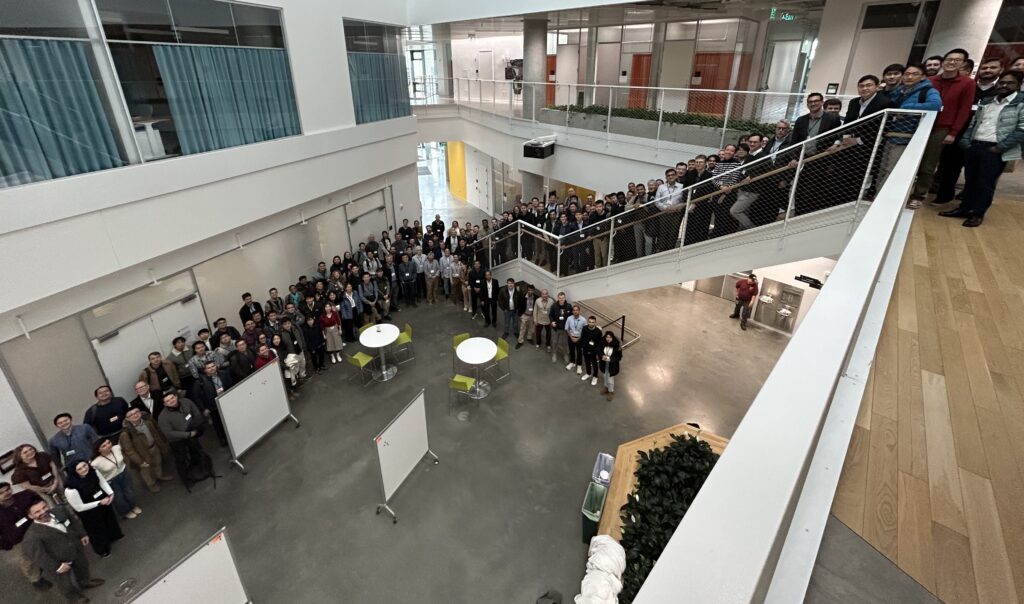
Pictures from the event can be found here.
Presentations will be posted here.