Digital Spines and Collaboration
Session Chair: Ricardo Bessa, INESC-TEC
This session focused on the potential for collaboration between the European Union and the United States in the digitalization and modernization of power systems. The discussion will focus on shared research and innovation priorities, including AI, digital twins, grid resilience, interoperability, and advanced decision-support solutions. Particular attention will be given to identifying complementarities between ongoing initiatives, mechanisms for knowledge exchange, and opportunities for joint research, demonstration, and standardization activities. The session will also consider how closer transatlantic cooperation can accelerate the deployment of innovative technologies and promote common approaches and interoperable solutions.
GENESIS-EU – GENERATIVE DIGITAL SPINE FOR INTEGRATED ENERGY SYSTEMS IN EUROPE
Speaker: Hugo Morais – INESC ID
Europe’s transition towards a decarbonised, decentralised, and increasingly electrified energy system is placing unprecedented demands on digital infrastructures supporting system planning, operation, and governance. Recent European policy and research initiatives , explicitly recognise the need for generative AI-powered digital spines capable of enabling dynamic, software-defined, and reconfigurable management of energy systems across heterogeneous and decentralised settings. At the same time, experience from past research and innovation actions shows that many digital solutions struggle to scale beyond pilots, either because they are too generic to be operationally adopted or too specialised to be reused across contexts2.
The vision underpinning GENESIS-EU is that artificial intelligence should evolve from a collection of isolated analytical tools into a coherent, trusted, and reusable digital backbone for energy system decision-making. Central to this vision is the recognition that European energy systems are inherently heterogeneous, technically, organisationally, and regulatorily, and therefore cannot be served by monolithic platforms or one-size-fits-all solutions. Instead, GENESIS-EU adopts an architectural perspective in which high-level digital and AI architectures provide stable design patterns, interfaces, and decision workflows that can be instantiated, specialised, and integrated with existing tools, platforms, and operational practices.

AI-powered grids: securing the future of European energy
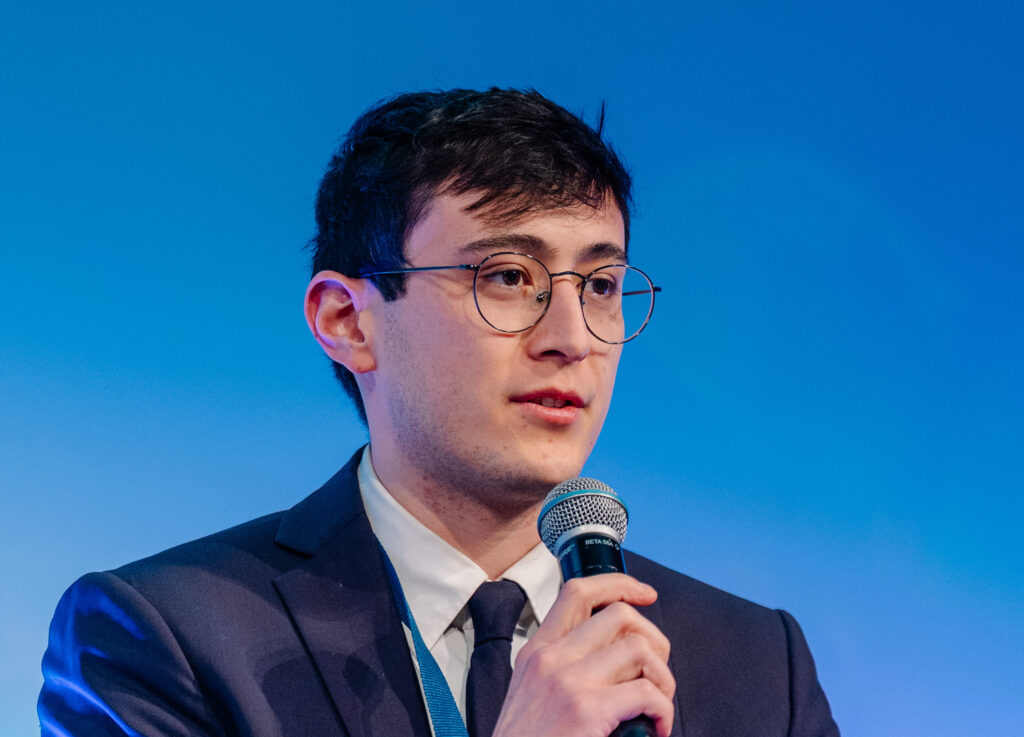
Speaker: Hadrien Thebault – European Commission
European Commission’s presentation of the Strategic Roadmap on digitalisation and AI in the energy sector and other relevant legal initiatives. Focus on how collaborations in AI for energy can deliver for the future of European grids.
A Genesis Mission project – GridFM2.0
Hendrik F. Hamann – Brookhaven National Laboratory/Stony Brook University
The U.S. Department of Energy’s Genesis Mission aims to transform science and energy through artificial intelligence by connecting models, data, computing resources, and scientific workflows. GridFM 2.0 contributes to this mission by developing a reusable AI foundation for electric-grid planning and operations. Rapid growth from AI data centers, electrification, distributed energy resources, and extreme weather is creating a “billion-scenario” challenge that conventional planning tools cannot address efficiently. Building on Phase I results demonstrating more than 100-fold acceleration over physics-based optimal-power-flow solvers, GridFM 2.0 will improve model speed, accuracy, robustness, scalability, data efficiency, adaptability, and uncertainty-aware feasibility. GridFM will screen large scenario ensembles, identify high-value and high-risk cases, and route selected cases to trusted engineering solvers and human experts for validation. The project will also develop GridVISTA, an agentic workflow integrating scenario generation, GridFM screening, multi-objective optimization, validation, and decision support for short-term operations and long-term expansion planning. Through integration with the American Science Cloud and ModCon, the project targets evaluation of one billion scenarios for a grid with at least 2,000 nodes within 24 hours using fewer than three H100-class GPUs. Utility digital twins, secure testbeds, and co-pilot deployments will demonstrate value and provide Genesis models, datasets, benchmarks, and workflows.

GenAISIS Project – A Pan-European Generative AI-based Digital Spine for a Software-defined Interoperable Smart Energy System
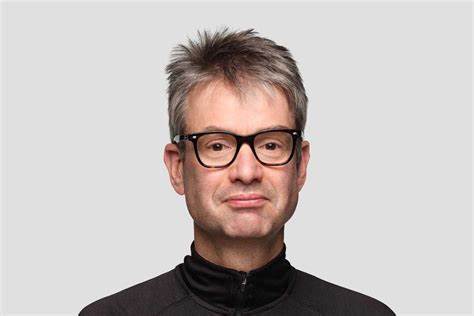
Speaker: Elissaios Sarmas – EPU-NTUA
GenAISIS will design, implement and validate a pan-European GenAI -powered Energy Digital Spine, aimed to turn on actual fragmented yet centralised energy system into an interoperable GenAI-streamlined Software-Defined Smart Grid. The EU-EDS acts as an Energy Meta-Operating System that combines virtualised energy assets, GenAI models and digital twins to enable decentralised coordination across transmission, distribution and cross-sector energy ecosystems, while integrating legacy OT/IT, EVs, smart buildings.