AI Grid Optimization

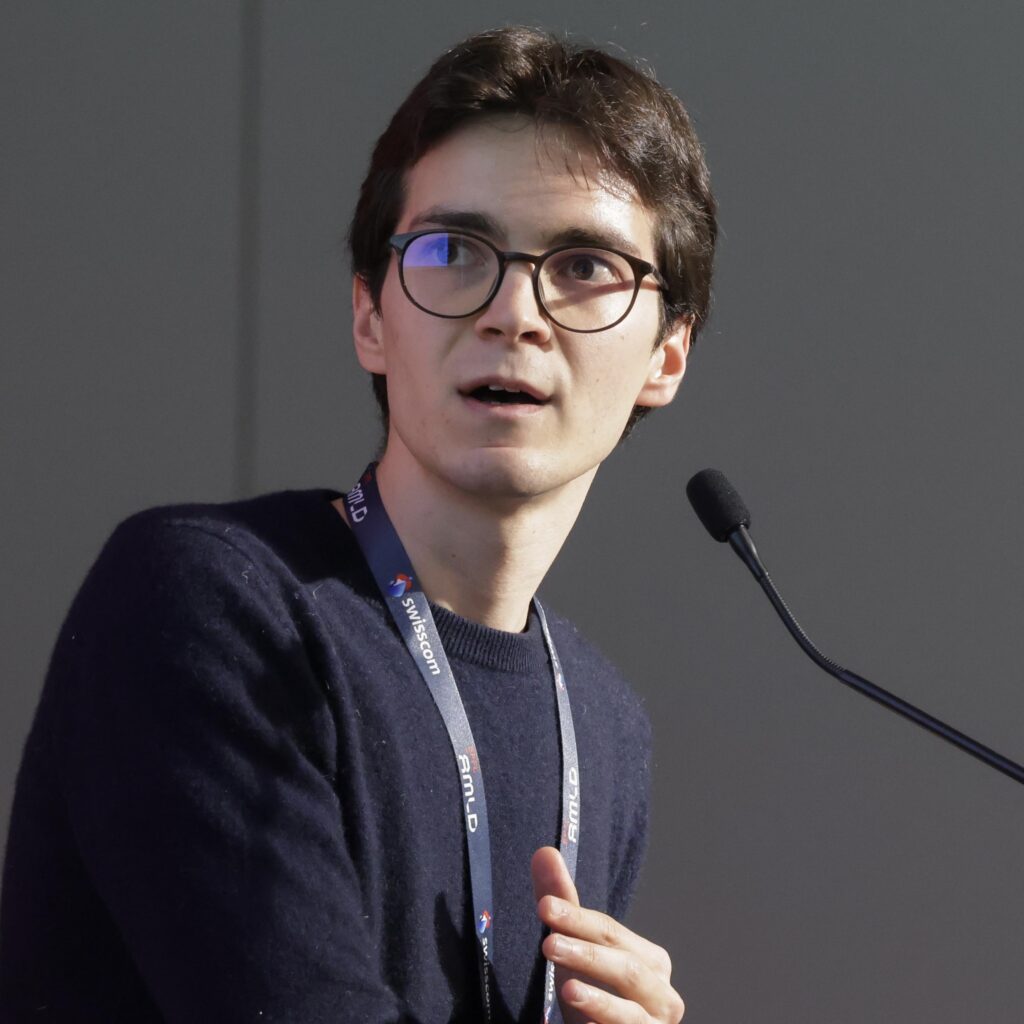
Session Chairs: Thomas Brunschwiler and Alban Puech – both from IBM Research
This session explores state-of-the-art optimization methods for power system operation and planning. Topics include, but are not limited to, (i) benchmarking cases that report on computational bottlenecks and high-impact application scenarios; (ii) generation of high-quality datasets and benchmarks, including reference solutions from classical solvers, for training and evaluating AI-based approaches; (iii) advances in neural solvers, Grid Foundation Models (GridFM), and hybrid AI–classical workflows that improve computational efficiency while maintaining optimality, feasibility, and physical consistency; and (iv) GPU-accelerated classical optimization algorithms that continue to provide the reference for accuracy and reliability. Together, these topics highlight synergies between optimization, accelerated computing, and AI for next-generation power systems.
AI-Accelerated Optimisation
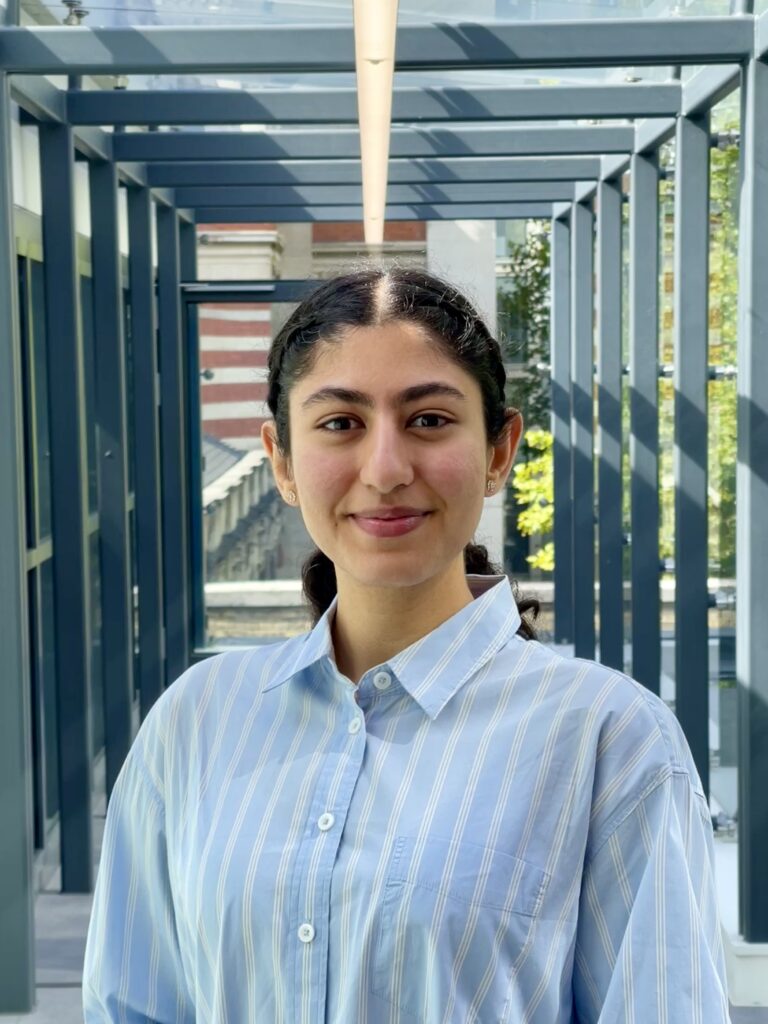
Speaker: Maryam Fetanat – Imperial College London
As optimisation problems grow in scale and complexity, the challenge is no longer only finding good solutions but finding them fast enough to be useful. This talk presents two ways machine learning can accelerate optimisation. The first uses an end-to-end surrogate to learn the solution map of an optimisation problem and predict solutions directly, illustrated through electricity-market clearing. The second follows a learn-to-optimise approach, where machine learning identifies high-confidence decisions that can be fixed in advance, reducing the mixed-integer problem passed to the solver. The unit commitment case study takes a closer look at our winning approach in EPRI’s AI-ccelerating Unit Commitment Competition and the ideas that made it effective. Together, the two case studies show different ways of combining learning and optimisation, and what we learned about where each approach works well and where its limitations begin to matter.

Transferable graph learning for transmission congestion management via busbar splitting
Speaker: Jochen Cremer – TU Delft
Network topology optimization (NTO) via busbar splitting can mitigate transmission grid congestion and reduce redispatch costs. However, solving this mixed-integer nonlinear problem for large-scale systems in near-real-time is currently intractable with existing solvers. Machine learning (ML) approaches have emerged as a promising alternative, but they have limited generalization to unseen topologies, varying operating conditions, and different systems, which limits their practical applicability. This paper formulates NTO for congestion management considering linearized AC power flow, and proposes a graph neural network (GNN)-accelerated approach. We develop a heterogeneous edge-aware message passing GNN to predict effective nodes for busbar splitting actions as candidate NTO solutions. The proposed GNN captures local flow patterns, improves generalization to unseen topology changes, and enhances transferability across systems. Case studies show up to 104 × speed-up, delivering AC-feasible solutions within one minute and a 2.3% optimality gap on the GOC 2000-bus system. These results demonstrate a significant step toward near-real-time NTO for large-scale systems with topology and cross-system generalization.
On the comparison of hybrid AI + Optimization architectures for the AC-OPF problem
Matteo Bau – Ricerca sul Sistema Energetico
The number of architectures combining AI and optimization for the AC-OPF task is growing rapidly, and so is their internal complexity: from partial prediction with PF completion, to full prediction with feasibility projection, to methods that interleave primal/dual updates, to name a few. Yet comparison among such methods remains limited and scattered, hindering the ability to identify a superior solution or even research direction in terms of optimality, feasibility and scalability. In this talk, we attempt to fill this gap, at least partially, by comparing empirically a selection of advanced methods for the AC-OPF task within the framework of a fair, unified experimental protocol.


A look back on the L2RPN AI4REALNET 2026 challenge
Catalina Obando – RTE
The L2RPN AI4REALNET 2026 challenge was held from june to october 2026. It has been organized in the context of AI4REALNET project and addresses the Electricity Network Use Case 2 of the project, “Sim2Real”. This concept captures the fundamental transition from a training environment to reality, reflecting the necessity for an AI assistant to seamlessly adapt and perform optimally in the dynamic and unpredictable conditions of a real transmission grid, which is crucial in high-risk sectors as Power Grid operation.
In this challenge, participants were expected to develop agents to manage grid operations, while adapting to real world conditions: the score thus reflects the capability of the agents to be used for the operation of a “real” transmission grid, in the sense that the “real” environment doesn’t exactly behave as the one made available to the agent during training and simulation procedures.
The presentation will give explain the competition setup, and show the main results and outcomes.